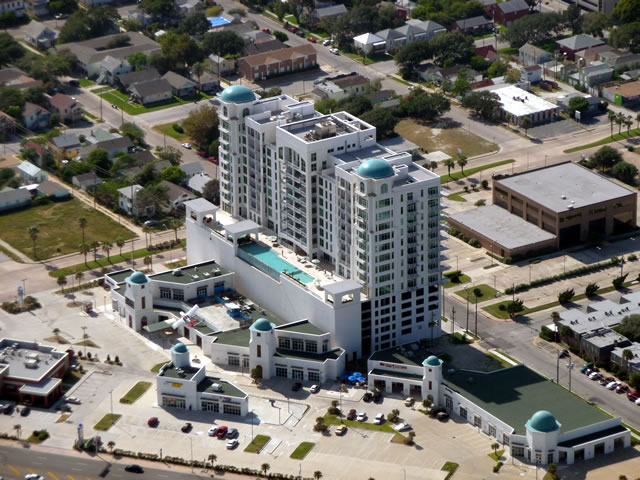


Property Management Services on the Texas Coast

Typical Property Management Services on the Texas Coast

Market the property for vacation rentals or long-term tenants

  • Prepare home for each rental
  • Check-in and check-out procedures
  • Clean home and optimize interior appeal
  • Manicure landscaping to increase curb appeal
  • Create ads tailored to the property and advertising medium
  • Advertising mediums include:

Work with other agents to find renters and tenants

  • Provide a 24-hour hot-line for prospective tenants about the property
  • Handle calls from prospects for questions and viewings
  • Provide prospective tenants with applications that are legally compliant with fair housing laws
  • Collection applications, tenant screening and selection
  • Perform a background check to verify identity, income, credit history, rental history, etc.
  • Grade prospective tenants according to pre-defined criteria

Financial and Legal 

  • Provide accounting property management services
  • Make payments on behalf of the owner for mortgage, insurance, HOA dues, etc.
  • Detailed documentation of expenses via invoices and receipts
  • Maintain all historical records (paid invoices, leases, inspection reports, warranties, etc.)
  • Provide annual reporting, structured for tax purposes as well as required tax documents including a 1099 form, and advise owner on relevant tax deductions related to their rental property
  • Provide easy to read monthly cash-flow statements which offer a detailed breakdown of income and itemized expenses
  • Advise in the event of a legal dispute or litigation, and refer owner to a qualified attorney when necessary
  • Understand and abide by the latest local and state laws that apply to renting and maintaining rental properties
  • Perform periodic inspections on a predefined schedule looking for repair needs, safety hazards, code violations, lease violations, etc.
  • Send owner periodic reports on the condition of the property

Maintenance, Repairs, and Remodeling

  • Provide and oversee an in-house maintenance crew
  • Establish a preventative maintenance policy to identify and deal with repair needs
  • Provide a network of licensed, bonded and fully insured contractors vetted for price and work that is up to code
  • Assign jobs to different parties (employees, handyman and contractors) based on value.
  • Maintain outdoor areas
    • Landscaping
    • Removing trash and debris
  • Maintain and monitor a 24-hour emergency repair hot-line
  • Larger renovation or rehab projects
    • Provide recommendations on how the project can maximize rental income.
    • Prepare preliminary cost estimates
    • Get multiple independent bids for the work
    • Act as general contractor overseeing the work

For long term rentals

Tenant Move In

  • Draw up leasing agreement, and confirm move in date with tenant
  • Review lease guidelines with tenant regarding things like rental payment terms and required property maintenance
  • Ensure all agreements have been properly executed
  • Perform detailed move in inspection with tenant and verify condition of property prior to move-in.
  • Collect first month’s rent and security deposit
  • Rent collection, receiving rent, getting overdue payments
  • Sending out pay or quit notices, enforcing late fees, and evictions

Tenant Move Out

  • Inspect unit and fill out a report on the property’s condition when the client moves out
  • Provide tenant with a copy as well as estimated damages
  • Return the balance of the security deposit to the tenant
  • Forward any portion of the owner’s portion of the tenant deposit to the owner or hold in owner reserves for repairs.
  • Clean unit and perform and needed repairs or upgrades, and Re-key the locks
  • Put the property back on the market for rent

Want to do it yourself?

Get this book How to Set Up and Run a Successful Airbnb Business

Comments Off on Property Management Services on the Texas Coast

Ask before You Buy Insurance on the Texas Coast

Questions to Ask Your Realtor BEFORE You Buy Property Insurance on the Texas Coast

1. Is Windstorm Insurance mandatory? Do I really need it?
Mortgage companies typically require full coverage. In the event you decide to sell your home the Certificate of Compliance (WPI-8) is an excellent selling point which proves code compliance and provides eligibility for windstorm coverage.

2. If I have flood insurance, isn’t that all I need?
No. A flood policy does not cover ANY damage to a structure due to wind and hail.

3. Are all counties affected by Windstorm requirements? Is this house in a windstorm (high wind) area (First Tier County)?
Just the counties which border the Gulf of Mexico (First Tier Counties). Chambers, Jefferson, Galveston, Brazoria, Matagorda, Calhoun, Refugio, San Patricio, Aransas, Nueces, Kleberg, Kenedy, Willacy, and Cameron.

4. Is the house currently insured for wind and hail insurance?
The Certificate of Compliance (WPI-8) is “proof of eligibility” for wind and hail insurance coverage through the State’s catastrophe pool, the Texas Windstorm Insurance Association (TWIA). Homeowners may contact TDI at  www.tdi.state.tx.us for more information about the Windstorm Inspection Program or search for the Certificate online.

5. What is the claims history of this house? What repairs have been made?
The current insurance agent should have answers to all questions concerning the coverage on this structure. Including any claims filed.

6. Can I insure just the roof?
No. The entire structure must be insured to meet applicable code standards.

7. Who can conduct windstorm inspections?
An employee of TDI’s Windstorm Inspections Division, or an engineer who has been appointed by the Commissioner of Insurance.

8. What if the house does not pass inspection? What is my alternative/next step?
Completed structures can be certified by appointed engineers once deficiencies are corrected and code compliance met.


Texans living and working along the Gulf Coast should review their homeowners and commercial insurance policies prior to hurricane season to ensure they are covered against losses caused by wind and hail.

Some insurance companies provide wind and hail coverage, while others do not.

If your company has excluded wind and hail coverage from your policy, shop around. You may be able to find another company that offers wind and hail coverage in your area. If you can’t find a company providing the coverage, ask your insurance agent about purchasing insurance from the Texas Windstorm Insurance Association (TWIA). TWIA is the state’s insurer of last resort for wind and hail coverage when homeowners and business owners are denied coverage in the 14 coastal counties.

TWIA Structure Eligibility Requirements
•TWIA’s coverage territory includes Aransas, Brazoria, Calhoun, Cameron, Chambers, Galveston, Jefferson, Kenedy, Kleberg, Matagorda, Nueces, Refugio, San Patricio, and Willacy counties.

• Texas Department of Insurance (TDI) building specifications. New structures, alterations, additions, or repairs to existing structures, including re-roofs or roof repairs must be inspected by a TDI inspector or an engineer who has been appointed by the Commissioner of Insurance. There is no fee for any inspection conducted by TDI. All inspections must be made during the construction phase.

Shopping for Insurance
• Use an insurance agent to help you shop. Some agents represent only a single company or company group. Independent agents may represent several companies. To find an agent near you visit www.helpinsure.com, a free service of the state.
• Make sure your insurance agent and company are licensed.
• Use TDI’s Homeowners Insurance Price Comparisons.
• Understand homeowners policy types and coverages.
• Decide whether you need other coverages. Homeowners policies do not cover damage caused by rising waters. You can buy a separate policy to cover most types of flooding from the National Flood Insurance Program.  www.floodsmart.gov.
• Consider factors other than price. A company’s complaint history and financial rating can indicate the level of service you will receive.
• Ask about payment options and discounts, choose the highest deductible you can afford, and know how your credit score affects you.

Contact TDI for more answers to insurance questions at www.tdi.state.tx.us

Comments Off on Ask before You Buy Insurance on the Texas Coast

Like-Kind Exchanges – Real Estate Tax Tips

Like-Kind Exchanges – Real Estate Tax Tips

Like-kind exchanges — when you exchange real property used for business or held as an investment solely for other business or investment property that is the same type or “like-kind” — have long been permitted under the Internal Revenue Code.  If you make a like-kind exchange, you are not required to recognize a gain or loss under Internal Revenue Code Section 1031. If, as part of the exchange, you also receive other (not like-kind) property or money, you must recognize a gain to the extent of the other property and money received. You can’t recognize a loss.

Under the Tax Cuts and Jobs Act, Section 1031 now applies only to exchanges of real property and not to exchanges of personal or intangible property. An exchange of real property held primarily for sale still does not qualify as a like-kind exchange.

Effective January 1, 2018, exchanges of machinery, equipment, vehicles, artwork, collectibles, patents and other intellectual property and intangible business assets do not qualify for non-recognition of gain or loss as like-kind exchanges. However, certain exchanges of mutual ditch, reservoir or irrigation stock are still eligible for non-recognition of gain or loss as like-kind exchanges.

Like-Kind Property

Properties are of like kind if they’re of the same nature or character, even if they differ in grade or quality.

Real properties are of like kind, regardless of whether they’re improved or unimproved. For example, an apartment building would be like-kind to another apartment building. However, real property in the United States is not like-kind to real property outside the United States.

When multiple individuals own real property—such as when children inherit their parents’ estate or when entities like partnerships or limited liability companies (LLCs) hold the asset—problems can emerge when it comes time to sell that property.

  • If all the partners in the partnership, members in the LLC, or inheriting children agree on a common form of transaction, the complexity is removed. The entity itself either sells the real estate and everyone shares in the sales proceeds, or the entity undertakes a like-kind exchange with everyone participating in the tax deferral.
  • Problems arise when interests diverge. Some of the investing partners or inheriting children may want to cash out of the real estate, while others want to seek a tax deferral such as through a like-kind exchange.
  • Fortunately, some common transaction structures have been developed that provide a reasonable chance of yielding a predictable tax result.

The phrases “drop and swap” or “swap and drop” describe popular structures that enable real estate owned by an entity composed of several owners to engineer a like-kind exchange for some and a cash-out sale for others.

  • In brief, the partnership distributes the real property to the individuals within the entity, removing the entity-level structure and making the individuals joint tenants (the “drop”). Then partners can individually pursue the form of transaction most suitable to their interests. Some owners might sell out for cash, while others may undertake a like-kind exchange (the “swap”).
  • Drop and swap transactions are grounded in the statutory requirements for like-kind exchanges.
  • For there to be a valid like-kind exchange, real property held for qualified use (the relinquished property) is exchanged for other property of a like-kind that is held for a qualified use (the replacement property).
  • Only real property can be exchanged. Interests in the partnership owning the property do not qualify for a like-kind exchange. Thus, the real estate needs to be distributed out of the partnership to the partners.
  • For an exchange to qualify as a like-kind exchange, the investor must hold both the to-be-relinquished property and the replacement property either for productive use in a trade or business or as an investment.

Reverse Exchanges
A reverse exchange involves the investors acquiring the replacement property before the relinquished property is sold. There might be good reason for reversing the order of the transaction. The investors may want to be certain they can obtain the essential property before undertaking the large like-kind exchange.

  • The IRS has made reverse exchanges easy by creating a safe harbor.
  • If the investor falls within that safe harbor, tax consequences are predictable. For this to apply, the transaction requires that someone acquires the replacement property before exchanging it with the investor.
  • Under the safe harbor, an exchange accommodation titleholder can acquire the replacement property and hold it until the disposition of the relinquished property.
  • In a reverse exchange, the relinquished property must be identified within 45 days of transferring the replacement property, with 180 days to transfer the replacement property to the investor.

Tenants in Common Arrangements
Rather than having separate interests, an investor might want to acquire replacement property with others and contemplate acquiring an LLC interest in an entity that owns the property.

  • Since the LLC is not considered real property the investor must acquire an interest in real property, not an interest in an entity that owns the real property.
  • In this situation, the usual arrangement is for the investing group to enter a “tenants in common” (TIC) arrangement, with each investing person acquiring an undivided interest in the property.

Reporting a Like-Kind Exchange

Form 8824, Like-Kind Exchanges, is used to report a like-kind exchange. Instructions provide information on general rules and how to complete the form.


Reference:

Comments Off on Like-Kind Exchanges – Real Estate Tax Tips

Condominiums on the Texas Coast

The basics of Condominiums (Condos) on the Texas Coast

The single-family detached home with a yard isn’t everyone’s American Dream. In high-priced markets with space at a premium, the only affordable solutions for some buyers are condominiums and townhouses.

Condominiums and townhouses are forms of attached housing, homes that share common walls and communal areas with neighbors. This type of housing is popular and essential in pricey real estate markets in which only a small percentage of households can afford to purchase a home. Condominiums are beginning to proliferate in less-populated areas, too, as an alternative for retirement housing for active adults.

Condominium
Single unit, most often resembling a more superbly finished apartment. Found in complexes large and small, high-rise, or low-rise. The owner has title to the interior space of the unit and shared title to communal areas in the complex. Condominiums are governed by a condominium board of directors (voted by residents) in accordance with bylaws and covenants, conditions, and restrictions.

Town house
Two-floor unit sharing common wall with at least one other townhouse. Townhouses are commonly found in clusters (rowhouses). The owner has title to the unit and land under unit, and shared title to communal areas (if any). Some ownership arrangements more closely resemble those of condominiums. Town houses are governed by homeowner association (voted by residents) in most cases.

Know your documents
Before you buy a condominium, you’ll want to bone up on the project by yourself or with a real estate attorney. There are several documents you’ll want to go over with a fine-tooth comb before you sign any kind of purchase contract. These papers should be available from the condominium’s board of directors or their representative. They include:

Master deed: The key document in a condominium project, the master deed establishes the project as a condominium project. It gives residents the authority to form an operating association and gives the legal descriptions of all individual units and communal areas.

Bylaws: These can become sticky in heated board of directors’ discussions. Bylaws are the operating rules for the condominium association. Among other things, they authorize a budget to be created, the assessment of fees, the hiring of professional management staff and other operating duties.

House rules: These also can become sticky when owners disagree. House rules govern what owners can do in shared areas.

Covenants, conditions, and restrictions: Private restrictions on the use of project property; usually created by the developer.

Purchase agreement: This is like a standard purchase. It should include a cooling-off period during which you can back out and financing and inspection contingencies. Other papers: Current operating budget, current and proposed assessments, financial statement of the homeowner’s association and any leases, contracts, blueprints, or other design plans.

Condominiums may offer maintenance-free homeownership, but not all condominium projects are nirvana. Take the time to check out the complex before you buy and look out for these red flags: If more than 50 percent of the units are rentals, think twice about the project. Upkeep may be poor, and some lenders will not make a loan on a unit in the complex, which could reduce the long-term value of your investment.

If the condominium association doesn’t have a health reserve fund, beware. If there isn’t money to fix major items such as a new roof or plumbing, the members will be hit with a special assessment to pay the tab.

Avoid a condominium association in which the board of directors isn’t getting along. They will make poor decisions for everyone else despite one another. Avoid a condominium project that is heavily involved in litigation. Lawsuits from builders and other homeowners can put a cloud over the project.

Comments Off on Condominiums on the Texas Coast

Fractional Ownership on the Coast

Fractional Ownership is coming to the Texas Gulf Coast

What is Fractional Ownership?
Fractional Ownership is a middle ground solution to second home ownership. It is between whole ownership, with sole responsibility and full exclusive use, and time-shares, where most often, you purchase vacation time in a resort, (about two weeks) not the real estate itself. Factional Ownership consists of owning an “Undivided fractional fee-simple interest” in a specific property. In simple terms, you are buying your vacation home in partnership with other owners who share the cost with you.

Fractional vacation homes have the appeal of defraying costs by sharing them with others and making effective use of the time that you are not using the property.

How does it work?
Fractional Ownership is like any other real estate purchase, except that you are only purchasing a fraction of the property instead of the whole property. Different developments and properties have a variety of options. The fractional shares can vary from a thirteenth (1/13th) to a half share (1/2). A thirteenth share, for example, provides one week’s use of the property each season for a total of four weeks per year. If this were all that you wanted, you might want to compare the costs to a timeshare. However, more common are quarter shares, where you use the property one week out of every month, sharing the property with only three other purchasers. Under this unique form of strata title ownership, an owner has registered title to a one-quarter interest in the condominium, estate, or townhouse.

Management of the property is most often taken care of by a third party or a Homeowner’s Association. In some developments, the Homeowner’s Association leases the units from the developers, and you, as the quarter owner, sub-leases the unit back. In some cases, an annual budget is established, and owners make monthly or quarterly payments to cover utilities, insurance, taxes and the like.

Benefits
One of the main reasons people buy fractional, even when they can afford the entire purchase, is that the expense and responsibility of ownership is reduced. This makes the second home truly a vacation, as you can simply go there, and know everything is in order. At the same time, you have the deed to the property, and you can pass it down through generations in your family or resell it through a broker.

Some of the fractional developments also participate in global vacation exchange clubs. This offers the ability to travel elsewhere for vacations, while still maintaining the fractional ownership of your own property.

Many of the fractional developments are in high-end resort locations, where condominium or property ownership is priced at the high end. Again, the fractional owner has access to all the amenities in the resort area, while paying less to get in.

Some Key Advantages

  • Affordability. As an example, a one-fourth share in a four-bedroom oceanfront home goes for far less than you’d pay outright.
  • Shared costs. Taxes, maintenance, insurance, snow removal, financing costs. The agency manages these things, so you don’t have to.
  • Deeded ownership. As with all fractional, you own something that can be bought, sold, borrowed against, or transferred to your heirs.
  • Business relationship. No arguing with your in-laws about whether your mounted deer trophy can go over the fireplace, or whether they paid their share of the snow-removal costs.
  • Flexibility. You can sell whenever you want, or you can buy out your common tenants as time goes by. Shared ownership can be a wonderful way to get your foot in the door.
  • Expanded possibilities. If you’ve got more to spend, consider owning more than one share in different homes in various places.
  • You can get more than one vacation home experience for less than the price of one.
Comments Off on Fractional Ownership on the Coast

News

Comments Off on News

About us

Texas Beach Homes is a full-service real estate agency that specializes in beach and waterfront properties, including condominiums, single family homes, and investment properties in South Padre, Port Aransas, Galveston, and Crystal Beach.

We’re Texas’ only source for coastal market analysis; winner of the Governor’s award and covered in Texas Monthly and the New York Times.

We offer services to assist customers in finding and purchasing the perfect property, including market analysis, architecture, mortgage, investment, and legal with an award-winning reputation that uses advanced technology to help customers make informed decisions.

Texas Beach Homes has been “Making Dreams Come True Since 1995” We know the value of real estate on the Texas coast better than anyone; helping you find and make one the most important, most intimate investments of your lifetime.


Michael Stuart, CEO

Michael Stuart, CEO

Mike Stuart, CEO at Texas Beach Homes, boasts a comprehensive background in the tech sector. His work includes designing enterprise ...
Alice Donahue, Broker

Alice Donahue, Broker

Alice Donahue, Broker, Texas Beach Homes Alice Donahue is a licensed Real Estate Broker in Texas who grew up in ...
Anne Willis, Advisor

Anne Willis, Advisor

Anne Willis, Real Estate Advisor, Texas Beach Homes Anne Willis is a Real Estate Advisor and lifelong resident of Bolivar ...
Mark Stuart, Architect

Mark Stuart, Architect

Mark Stuart, Architect, Texas Beach Homes Mark, a registered architect specializing in coastal properties, has a wealth of expertise in ...
Badri Sathyanarayanan, CTO

Badri Sathyanarayanan, CTO

Badri Sathyanarayanan, Chief Technology Officer, Texas Beach Homes As the Chief Technology Officer for Texas Beach Homes, Badri is responsible ...
Shelly Maldonado, Mortgage

Shelly Maldonado, Mortgage

Shelly Maldonado is a mortgage loan officer specializing in coastal real estate. A mortgage loan officer guides you through the ...

Total Members

Comments Off on About us

Contact us

We love to hear from you!

"*" indicates required fields

This field is for validation purposes and should be left unchanged.
Name
Comments Off on Contact us