All posts by Alice

Mike’s experience in the technology industry is quite extensive. During his career, he has had the good fortune of serving both as a designer of complex enterprise applications and as a corporate executive. After a career in Austin-San Antonio as an award-winning software developer for over twenty-five years, mike lives in Port Aransas managing Texas Beach Homes with a license to practice real estate in the state of Texas and a digital marketing e-Pro specialization from the National Association of Realtors. Formerly the founder/CEO of AssetWorks and USAF Officer for the New Technology Division Electronic Security Command with a graduate degree in computer science from Ohio State University.

Texas Real Estate Research Tools

Texas Real Estate Research Tools

These are the reports you see most agents reprint, without any indication of what they mean to you.

Texas Real Estate Research Center – considered inaccurate for cycle changes with lagging indicators.


Short-term Rental Research – considered accurate to real-time for vacation rental prices.


Federal Housing Research – considered accurate for national real estate conditions but lagging indicators.

National Association Realtors (NAR) – considered the least accurate market indicators.


Texas Coast Research

Specific enough for you to make smarter purchase decisions, be sure to look at the statistics relevant to your situation.


Reference Sources

Comments Off on Texas Real Estate Research Tools

Why real estate reports can be meaningless

Many real estate market reports are meaningless, but we’ve fixed this for the Texas coast!

Housing prices, when measured as broadly as a city area, are meaningless, drilling deeper into the raw data reveals housing markets that are deeply bifurcated.

National, state, and city real estate price reports and trends are imaginary numbers, as property prices in various parts of town, neighborhoods, and property types are drastically different, for example the median price in an older but upscale part of town may be +$1M while a newer entry level area is +$199k. Putting those two and many others together produces a fictitious median price and trends that have little meaning to individuals.

Looking at sales and history that combine these numbers doesn’t give you an analysis that’s meaningful to your decision, and because of this, buyers only get accurate numbers for a few recently comparable sales for a given property, moreover, consider the following.

Seasonality in prices for beachfront properties can obscure month-over-month changes in several ways

  • Firstly, the fluctuation of demand for beachfront properties based on the time of year can make it difficult to accurately compare prices from one month to the next. During the peak season, when demand is high, prices may be significantly higher than during the off-peak season, when demand is lower. This can lead to significant swings in prices from one month to the next, making it difficult to discern underlying trends.
  • Additionally, the specific timing and duration of the peak season for beachfront properties can vary from year to year, which can further obscure month-over-month changes. For example, if the peak season is longer or shorter than in previous years, this can cause prices to vary from one month to the next.

It is important to take seasonality into account when analyzing the prices of beachfront properties and to consider the broader market trends and economic factors that may be influencing prices over time. An analysis of long-term data, such as year-over-year changes, may provide a clearer picture of the overall trends in the market.

These can hardly offer the bigger picture you’re hoping to see and compare to make better decisions based on trends, real estate cycles, and other criteria that can make or break your financial situation.

We’re finally offering accurate analysis across the entire Texas coast you, and others, like the local government, need for better decision making.

Check out our marketing analysis for the Texas coast and see for yourself!

Comments Off on Why real estate reports can be meaningless

Questions to Ask BEFORE You Build on the Texas Coast

Questions to Ask Your Contractor BEFORE You Build or Repair on the Texas Coast

  1. Is the construction being done to meet the Windstorm Building Code?
  2. Are the products that are going to be used on my house approved by the Texas Department of Insurance (TDI)? This information can be obtained by contacting your local field office or a listing of Product Evaluations is available on the TDI website.
  3. Am I going to get a windstorm inspection on this project?
    Inspections must be performed to determine compliance with Windstorm requirements.
  4. If so, will the inspection be made by a TDI inspector or by an engineer appointed by the Commissioner of the Texas Department of Insurance?
    Either party may make the inspections. However, it is to your advantage to know who you will be able to discuss your inspections with.
  5. Who will coordinate the inspections and when will they be performed?
    Normally, it is the contractor who should coordinate the inspection dates and times. It is essential for the inspections to occur during the construction phase.
  6. Will I be kept informed as to the status of the inspections?
    Each inspector should leave documentation outlining the findings of each phase of the project. Being kept informed of inspection times will also allow you to personally meet with the inspector and discuss any issues which may be present.
  7. What are my options if my project is disapproved?
    You should discuss with your inspector AND builder/roofer what corrective measures are necessary for the project to be compliant.
  8. If my project is approved, when do I receive my WPI-8?
    Once the inspector submits the appropriate documentation to the Austin Windstorm office, it is checked and processed. If everything is in order, a WPI-8 will be posted on the TWI website (please allow three (3) working days). A hard copy of the WPI-8 is also mailed to the submitter (please allow one (1) week to receive).
  9. What should I do when the WPI-8 arrives?
    The WPI-8 should be stored in a safe place along with your other valuable papers. Always inform your insurance agent when you have construction projects and make them aware that you did get the WPI-8. Your agent will want to add a copy of the WPI-8 to your file, which can be printed from the TDI website
  10. Is the house built to the windstorm building code and eligible for wind and hail insurance?
    In the first-tier counties along the Texas coast, it is in the best interest of a homeowner to require the builder to furnish a Certificate of Compliance upon completion of the home. The Certificate of Compliance is “proof of eligibility” for wind and hail insurance coverage through the State’s catastrophe pool, the Texas Windstorm Insurance Association (TWIA).


Comments Off on Questions to Ask BEFORE You Build on the Texas Coast

Are these included in my Windstorm Certificate

Are these included in my Windstorm Certificate on the Texas Coast?

  • Wind-resistant roofing material conforming to ASTM D 3161 (or better) requirements.
    Choose products that have been tested to ASTM D 3161 and have a 110-mph wind resistance or higher. Download ASTM Fact sheet
  • Class 4 impact-resistant roofing material.
    Roofing products are tested for impact resistance using the UL 2218 impact resistance test. Approved products are classified 1 through 4, Class 4 being the most resistant. In an area where windborne debris is likely, Class 4 would be the better choice.
  • A secondary water barrier under the roofing material.
    A secondary water barrier provides protection if the roof covering is damaged. This is achieved by installing self-adhering flashing tape or modified polymer bitumen strips on top of the joints in the roof deck. The underlayment should be a 30# roofing felt, which is thicker and heavier than 15# felt.
  • Are gable ends braced to withstand severe windstorms?
    Collapse of a gable end wall is a common failure during hurricanes. To accommodate the strong pressures of hurricane force winds, gable ends need additional bracing. Information on this procedure is available from the Federal Alliance for Safe Homes (www.flash.org).
  • Truss-to-wall connectors and wall-to-foundation connectors.
    The only way to create a wind-resistant home is to secure all connections – roof-to-wall, floor-to-floor, and wall-to-foundation. This is accomplished by installing hurricane clips at those intersections.
  • Impact-resistant windows or hurricane shutters.
    Impact-resistant windows are designed to resist a combination of impact and continuous wind pressure. Always use products that have been tested to one of these standards – ASTM E 1886 or ASTM E 1996 – and have been designated as such through a recognized product approval system.
  • Garage door/doors that impact resistant.
    Garage doors are particularly vulnerable to high winds, because of the long span of the opening they cover and the lightweight material they are made of. Two options are available for strengthening garage doors: replace the door and track with a system that is designed to withstand high winds and wind-borne debris; or use a tested and approved impact resistant covering. In Texas, garage doors must be tested in accordance with ASTM E 330. Glass panels should be rated with ASTM E 1996 standards.
  • Skylights that are impact resistant.
    Skylights are extremely vulnerable to wind borne debris and hail. Skylights should be tested in accordance with ASTM E 1886 and ASTM E 1996 or other approved standards.
  • The required upgrades to qualify for all insurance credits or discounts offered.
    Investigate construction credits and discounts available through your insurance company and then review with your builder.
  • A safe room.
    A safe room, or storm shelter, provides the highest degree of protection for you and your family from the dangerous forces of extreme winds and debris impacts. Safe rooms can be site-built or manufactured and can be installed in new or existing homes.
  • Continuous load path construction.
    When a house is being constructed, it is an opportune time to build in a continuous load path, creating a structure highly resistant to extreme wind force. Balloon framing and the use of hurricane straps or clips connecting all intersections including the foundation can easily be designed into the structure at this time.
  • 5/8” thick plywood decking attached with 10d common nails spaced 4” O.C. at the edges and gable ends and 6” O.C. in the field of panels. Use this method to make your roof more impact resistant.
  • Impact-resistant exterior wall surfacing.
    Some siding manufacturers market their products as impact-resistant, but at this time a safer choice might be a hard surface such as brick, stone, or stucco.
  • Porch exterior walls properly connected to the foundation.
    Porch walls should be treated as any other exterior wall and anchored to the foundation. If blown loose it can be a threat to the main house in high wind situations.

Texas Windstorm twia-overview Texas Windstorm Insurance Association (TWIA) provides wind and hail insurance to 14 Texas gulf coast counties.

Homeowners_Disaster_Insurance_Guide

Comments Off on Are these included in my Windstorm Certificate

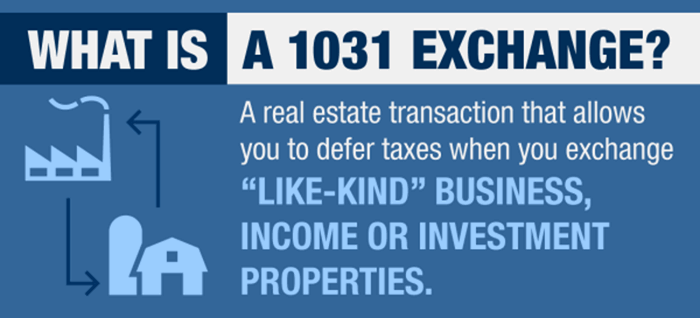
1031 Exchanges for Texas Coast Businesses

 Texas Coast Businesses can defer taxes using 1031 Exchanges

Section 1031 is a provision of the Internal Revenue Code (IRC) that allows a business or the owners of investment property to defer federal taxes on some exchanges of real estate.

The provision is used by investors who are selling one property and reinvesting the proceeds in one or more other properties. It is not available to buyers or sellers of personal homes for their own use.

How Savvy Investors Use 1031s to Defer Capital Gains and Build Wealth

  • A 1031 exchange is a tax break. You can sell a property held for business or investment purposes and swap it for a new one that you purchase for the same purpose, allowing you to defer capital gains tax on the sale.
  • Proceeds from the sale must be held in escrow by a third party, then used to buy the new property; you cannot receive them, even temporarily.
  • The properties being exchanged must be considered like-kind in the eyes of the IRS for capital gains taxes to be deferred.
  • If used correctly, there is no limit on how frequently you can do 1031 exchanges.
  • The rules can apply to a former principal residence under specific conditions.

1031s for Vacation Homes
You might have heard tales of taxpayers who used the 1031 provision to swap one vacation home for another, even for a house where they want to retire, and Section 1031 delayed any recognition of gain. Later, they moved into the new property, made it their principal residence, and eventually planned to use the $500,000 capital gain exclusion. This allows you to sell your principal residence and, combined with your spouse, shield $500,000 in capital gain, if you’ve lived there for two years out of the past five.  In 2004, Congress tightened that loophole.

However, taxpayers can still turn vacation homes into rental properties and do 1031 exchanges. For example, you stop using your beach house, rent it out for six months or a year, and then exchange it for another property. If you get a tenant and conduct yourself in a businesslike way, then you’ve converted the house to an investment property, which should make your 1031 exchange all right. Per the IRS, offering the vacation property for rent without having tenants would disqualify the property for a 1031 exchange.

1031 exchanges apply to real property held for investment purposes. Therefore, a regular vacation home won’t qualify for 1031 treatment unless it is rented out and generates an income.

Reference

Comments Off on 1031 Exchanges for Texas Coast Businesses
Strategy for Home Flippers

Specialty Mortgages for Texas Coast Investors

Specialty Mortgages for the Texas Coast

As a strategy for investors, renovators, and developers often called “home flippers” who do not intend to keep the home to maximize ROI.

  • Interest-Only Mortgages (I-O)
  • Adjustable-Rate Mortgages (ARM) with the option to make a minimum payment

Owning homes is part of the American dream. But high home prices may make this seem out of reach. To make monthly mortgage payments more affordable, many lenders offer home loans that allow you to:

  1. pay only the interest on the loan during the first few years of the loan term or
  2. make only a specified minimum payment that could be less than the monthly interest on the loan.

Whether you are buying a house or refinancing your mortgage, this information can help you decide if an interest-only mortgage payment (an I-O mortgage)—or an adjustable-rate mortgage (ARM) with the option to make a minimum payment (a payment-option ARM)—is right for you.

Lenders have a variety of names for these loans, but keep in mind that with I-O mortgages and payment-option ARMs, you could face payment shock. Your payments may go up a lot— as much as double or triple—after the interest-only period or when the payments adjust.

In addition, with payment-option ARMs you could face negative amortization. Your payments may not cover all the interest owed. The unpaid interest is added to your mortgage balance so that you owe more on your mortgage than you originally borrowed.

Be sure you understand the loan terms and the risks you face. And be realistic about whether you can handle future payment increases. If you’re not comfortable with these risks, ask about another loan product

What is an I-O mortgage payment?

  • Traditional mortgages require that each month you pay back some of the money you borrowed (the principal) plus the interest on that money. The principal you owe on your mortgage decreases over the term of the loan. In contrast, an I-O payment plan allows you to pay only the interest for a specified number of years. After that, you must repay both the principal and the interest.
  • Most mortgages that offer an I-O payment plan have adjustable interest rates, which means that the interest rate and monthly payment will change over the term of the loan. The changes may be as often as once a month or as seldom as every 3 to 5 years, depending on the terms of your loan. For example, a 5/1 ARM has a fixed interest rate for the first 5 years; after that, the rate can change once a year (the “1” in 5/1) during the rest of the loan.
  • The I-O payment period is typically between 3 and 10 years. After that, your monthly payment will increase—even if interest rates stay the same—because you must pay back the principal as well as the interest. For example, if you take out a 30-year mortgage loan with a 5-year I-O payment period, you can pay only interest for 5 years and then both principal and interest over the next 25 years. Because you begin to pay back the principal, your payments increase after year 5.

What is a payment-option ARM?

  • A payment-option ARM is an adjustable-rate mortgage that allows you to choose among several payment options each month. The options typically include
  • a traditional payment of principal and interest (which reduces the amount you owe on your mortgage). These payments may be based on a set loan term, such as a 15-, 30-, or 40- year payment schedule.
    an interest-only payment (which does not change the amount you owe on your mortgage).
    a minimum (or limited) payment (which may be less than the amount of interest due that month and may not pay down any principal). If you choose this option, the amount of any interest you do not pay will be added to the principal of the loan, increasing the amount you owe and increasing the interest you will pay.
  • Interest rates. The interest rate on a payment-option ARM is typically exceptionally low for the first 1 to 3 months (2%, for example). After that, the rate usually rises to a rate closer to that of other mortgage loans. Your monthly payments during the first year are based on the initial low rate, meaning that if you only make the minimum payment, it may not cover the interest due. The unpaid interest is added to the amount you owe on the mortgage, resulting in a higher balance. This is known as negative amortization. Also, as interest rates go up, your payments are likely to go up.
  • Payment changes. Many payment-option ARMs limit, or cap, the amount the monthly minimum payment may increase from year to year. For example, if your loan has a payment cap of 7.5%, your monthly payment won’t increase more than 7.5% from one year to the next (for example, from $1,000 to $1,075), even if interest rates rise more than 7.5%. Any interest you don’t pay because of the payment cap will be added to the balance of your loan.
  • Payment-option ARMs have a built-in recalculation period, usually every 5 years. At this point, your payment will be recalculated (lenders use the term recast) based on the remaining term of the loan. If you have a 30-year loan and you are at the end of year 5, your payment will be recalculated for the remaining 25 years. The payment cap does not apply to this adjustment. If your loan balance has increased, or if interest rates have risen faster than your payments, your payments could go up a lot.

Ending the option payments. Lenders end the option payments if the amount of principal you owe grows beyond a set limit, say 110% or 125% of your original mortgage amount. For example, suppose you made minimum payments on your $180,000 mortgage and had negative amortization. If the balance grew to $225,000 (125% of $180,000), the option payments would end. Your loan would be recalculated, and you would pay back principal and interest based on the remaining term of your loan.

How To Determine an Income Property’s Value Using Capitalization Rate

1. Determine the net operating income of the subject property the client is considering purchasing. If it’s an apartment complex, determine the net rental income after expenses.
Example: A six-unit apartment project yielding $30,000 net profit from rentals.
2. From recent comparable sold properties, determine the capitalization rate.
3. Divide the net operating income by the capitalization rate to get the current property value result.
Example: Assume a capitalization rate of 11%.
$30,000 / .11 = $272,727 current value of the property.

How To Calculate Capitalization Rate for Real Estate
By using other properties’ operating income and recent sold prices, the capitalization rate is determined and then applied to the property in question to determine current value based on income.
1. Get the recent sold price of an income property, such as an apartment complex.
Example: Six-unit apartment project sold for $300,000
2. For that same apartment project, determine the net operating income, or the net rentals realized by the owners.
Example: The rental income after expenses (net) is $24,000
3. Divide the net operating income by the sale price to get cap rate.
Example: $24,000 / $300,000 = .08 or 8% (The Capitalization Rate)

An Example Rental Property Cash Flow Calculation
This is a simple cash flow calculation to illustrate the potential of real estate as an investment. Critical to this, as with most investments, is an intelligent and well-researched purchase on the front end. We’ll assume for our example that this buyer did their research and made a good buy on our fourplex.

Here are the purchase and rental particulars:
1. The purchase price of the fourplex is $325,000.
2. The buyer places 20% down, or $65,000, financing $260,000.
3. A 30-year loan is at 6.5%, with Principle/Interest payment of $ 1643 per month.
4. Taxes and insurance at purchase are $3600/year, for total payment of $1943 per month.

The buyer did their research and sees a steady rental demand for these units, all of which stay occupied most of the time. However, to be prudent in their calculations, a 6% vacancy and non-payment risk will be calculated to anticipate real cash flow. The units are all identical and rent for $900 per month each.

1. Gross rental income is $900 X 4 X 12 months, or $43,200 per year.
2. Payments are $1943 X 12 = $23,316 per year.
3. The previous owner’s repair expense has averaged $1700 per year.
4. Vacancy and credit loss is estimated at 6% of rents or $2592 per year.
5. Owner spends about $400 each year in miscellaneous and advertising costs and manages the property on their own.

Calculation to the profits:
• Rent income – Vacancy Loss – Payments – Expenses = Cash Flow
• $43,200 – $2592 – $23,316 – $2100 = $15,192 / 12 = $1266 per month in positive cash flow.
Analyzing your return as “cash on cash invested”, you would divide your actual cash investment of $65,000 down into the annual return of cash, or $15,192. This is a yield of 23% of your cash invested.

Comments Off on Specialty Mortgages for Texas Coast Investors

Modular Systems Built Homes on the Texas Coast

Alternative Home Ideas on the Texas Coast

Modular Systems Built Homes

The Basics of Systems Built Modular Construction

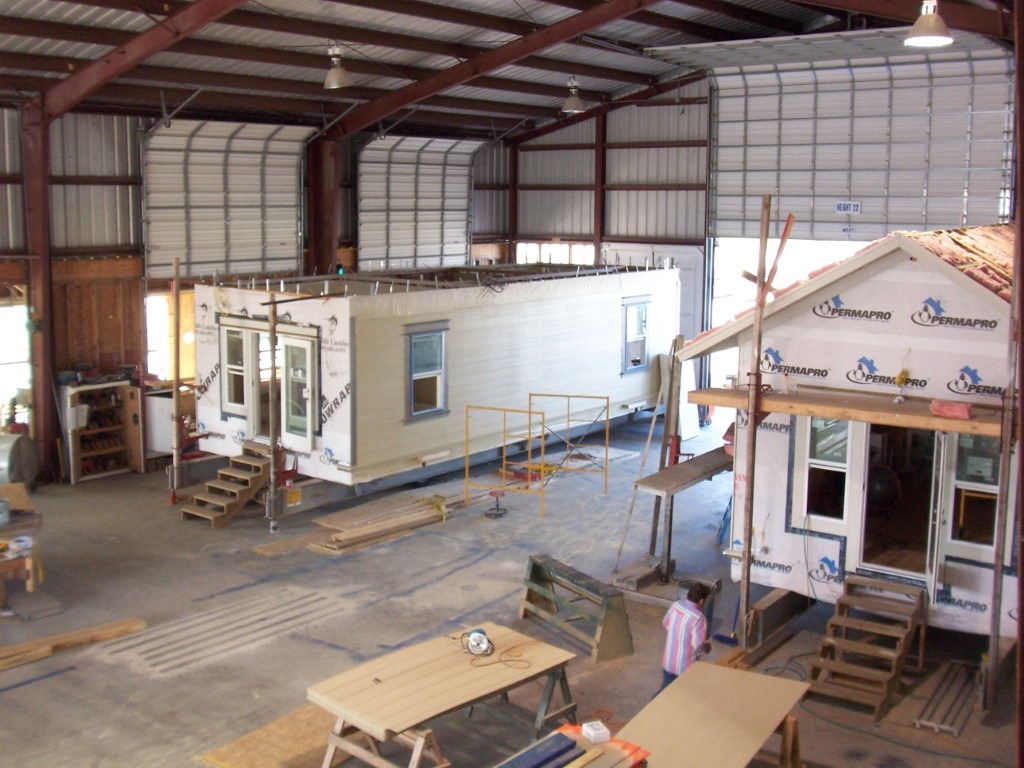
Modular Home: A modular home is a home constructed in multiple sections in a factory. It is built to the same building code used by conventional site-builders and is transported to the new home site where it is placed on a permanent foundation.
Modular Manufacturer: A company that constructs modular homes in multiple sections inside a controlled factory.
Modular Builder: The company that sells the home to the homebuyer and is responsible for ordering the home from the manufacturer. The modular builder constructs the foundation for the permanent installation of the home and is responsible for some final finish work after the home has been installed.
Modular Installer: A subcontractor who specialized in the installation of the modular home on the foundation.

The Systems Built Modular Process

THE FACTORY/MANUFACTURER
Modular homes are built in a factory setting where raw materials and design and assembly personnel are brought together in a controlled environment to create a finished product. Construction within a factory eliminates the possibility of damage from weather and allows all materials to be assembled in a protected climate-controlled environment. This is important given the recent problems with mold as it eliminates the possibility of any water infiltrating the house during construction.

THE BUILDER/SELLER
The modular manufacturer does not sell directly to the homebuyer. Instead, homebuyers purchase a modular home from a modular builder, who is responsible for working with the buyer to determine the type and design of home they want. The modular builder then orders the home from the manufacturer. The modular builder is not an agent of the manufacturer, but an independent business owner.

CUSTOMIZATION
The builder and manufacturer will work with the homeowner to determine the type and design of modular home that best suits the purchaser’s needs. Home purchasers are unlimited in the style and size of the home they can have built. These homes are customizable and no two are the same.

CONSTRUCTION & PLAN REVIEW
Before a modular manufacturer begins construction, all building plans must be reviewed and approved in each state where the manufacturer intends to sell homes. Homes must be designed and built to the code for the state where the home will be shipped for final location. The manufacturers contract with state approved third party plan review agencies which conduct plan review on behalf of the state. The modular manufacturer also contracts with a third-party inspection agency that is licensed by the states to perform the in-plant inspection while the home is in production. When the housing sections or modules are complete, the third-party places a label on the home certifying that the home has been manufactured in conformance with the approved plans and complies with all provisions of the building code.

SHIPPING & STABILITY
After construction in the factory the separate modules are loaded for transport. To deal with the rigors of shipping, each modular home has been constructed with twenty to thirty percent more materials than a traditional stick-built home. (For example, drywall is typically glued with a special adhesive and then screwed to the framing). These additional materials increase the structural strength of the home as noted in a recent FEMA study on 1992’s Hurricane Andrew. The study concluded that “the module-to-module combination of units appears to have provided an inherently more rigid system that performed much better than conventional residential framing.”

FINAL ASSEMBLY
After the builder orders the home from the manufacturer, the manufacturer will give the builder specifications for the foundation. The builder is then responsible for preparing the foundation for the modular home. When the home is constructed, it is shipped to the job site. The next day, a crane is used to place the housing modules on the foundation and set the roof in place. By the end of the day, the home has been completely installed and is closed and secured. In the subsequent weeks, the builder will finish the home. This finished work includes securing any remaining roofing shingles, attaching siding and finishing some interior drywall work. Generally, the home is ready for occupancy within several weeks. Prior to moving in, a local building code inspector will make a final inspection and issue an occupancy permit.

The Benefits of Modular Homes


Limited Number of Subcontractors
The modular builder contracts with a limited number of subcontractors. Since most of the construction is performed in the factory, the modular builder has limited responsibilities. Most modular builders will subcontract out the foundation construction. In addition, the crane company and the installation crew are usually subcontractors. This eliminates the possibility that your builder will have delays from a “no-show” subcontractor.

Manufacturer Responsibility
Since most of the work is performed in the factory, the manufacturer is responsible for all of the construction of the home. When a problem results from work done in the factory (which is rare), the manufacturer corrects it. Consequently, ongoing problems with modular homes are unheard of.

Regulation & Inspection
As a result of the intense regulation and inspection of the home during construction, it is extremely rare that a home leaves the factory with a defect in design or manufacturing. The third-party inspection services see to this and assume liability for their plan review and inspection responsibility. Additionally, since modular construction is regulated by the state, the state is typically involved in correcting the problem.

Superior Construction
The larger quantity of construction material used in the modular home results in enhanced structural stability. The material that is used is also often of higher quality than what a stick builder uses, and the material is stored indoors until needed. Additionally, better construction techniques and higher quality control techniques reduce the chances for unforeseen defects. This includes problems such as mold that could arise from moist lumber.

Reduced Construction & Assembly Time
The modular home is completed in the factory in approximately one-third of the time it takes a stick built home to be completed. This eliminates the possibility of an on-site construction-related fire or other problems. The factory-controlled conditions also eliminate the possibility of severe weather delaying the completion of your home. Furthermore, a modular home is not subject to delays from back-ordered materials or unreliable subcontractors. Once the home is delivered it is closed and sealed within days and the remaining onsite work is completed very quickly. Within weeks, the home is available for the buyer to move in. Consequently, the neighborhood children won’t have a chance to play in your uncompleted house and there is no chance for vandals to damage the interior of your home.

Skills and Specialized Training of Modular Builders and Installers
Modular Manufacturers do not choose to deal with builders that are under-skilled and poorly capitalized. Manufacturers have a set list of builders they deal with and are in constant communication with these builders to update them on new techniques and changes in the industry.

Financing
Modular homes are financed in the same manner as conventional homes.


Why Build a Modular Home?

Modular houses are built out of boxes, called modules, which are constructed off site, transported to a building lot, and assembled into a finished home. All the materials – from framing, roofing, and plumbing to cabinetry, interior finish, and electrical – are identical to what you would find in a conventional “stick-built” home. The most striking thing about a modular home is not anything you can see, nor how it is made, but where it is made: in a modern factory designed to build good-quality modular homes.

The modular factory system combines engineering knowledge and factory-production methods to design and build more efficiently and with greater quality control. When done well, efficiency results in lower costs and quality control results in a better product.

Many consumers assume that the primary advantage of modular technology is lower modular home prices. That is only the third most important reason for building a modular home. Faster construction time is the second, and superior quality is the first.

Modular construction has become the construction method of choice for the quality- and cost-conscious house buyer. The best-built modular homes are better built than many stick-built homes. Modular homes offer better materials, state-of-the-art construction technology, superior finished quality, and time and money savings. And you gain all these benefits without sacrificing design or amenities.

Comments Off on Modular Systems Built Homes on the Texas Coast

Texas Coast Sand Dunes are Important

What are Sand Dunes and why are they important?
Dunes are a resilient natural barrier to the destructive forces of wind and waves. They are the least expensive and most efficient defense against storm-surge flooding and beach erosion. Dunes absorb the impact of high waves and storm surges, preventing or delaying the intrusion of water into inland areas. Dunes hold sand that help replenish eroded beaches after storms as well as buffer windblown sand and salt spray. By serving as our front line of defense against tropical storms and hurricanes, sand dunes can prevent property loss and save lives.

What factors threaten the stability of sand dunes?
The growth of mainland coastal population centers and the increasing development and recreational use of the barrier islands threaten the stability of the dune environment. Construction and heavy use of the beaches contribute to dune deterioration. The vegetation that secures sand is destroyed, sand is lost, and the dune line is breached by roads, trails, and storm runoff. Dune damage that results from human activities accelerates the damage caused by wind and wave erosion.

What can be done to preserve dunes and prevent dune deterioration?

  • The natural defense dunes provide can be strengthened by enhancing the development and stability of existing dunes and by building new ones. Native vegetation can be planted to accelerate sand accumulation. Plants such as bitter panicum, sea oats, and cordgrass can help trap sand and stabilize dunes. Temporary structures such as slated wood or plastic sand fencing may also be used, but use of natural plantings is preferable.
  • In areas where local sand supply is insufficient, dunes can be artificially constructed with imported beach-quality sand. These constructed dunes must be vegetated to maintain their stability.
  • Before beginning any beachfront construction or dune restoration activity, check with your local government beach and dune authority to obtain the proper permits and to ensure that no dunes will be harmed.
  • To report destruction of dunes, or if you have any questions about dune protection or restoration, visit the Texas General Land Office Beach Access and Dune Protection Program at Glo.texas.gov

Read the Texas Dune Protection Guide

Comments Off on Texas Coast Sand Dunes are Important

Questions Asked by Homeowners about Insurance

Questions Asked by Homeowners about Insurance

If a fire, flood, earthquake, or some other natural disasters were to destroy or damage your home:

  • Would you have the right insurance coverage to rebuild your house?
  • What is covered in a standard homeowner’s policy?
  • Where gaps in coverage exist, how can you fill them?

Reference Property Insurance on the Texas Coast

To simplify explanations, we assume that you have a policy known as Homeowners-3 (HO-3), the most common homeowner’s policy in the United States. Find out what type of homeowners policy you have.

Question # 1: Am I covered for direct losses due to fire, lightning, tornadoes, windstorms, hail, explosions, smoke, vandalism, and theft?

Yes. The HO-3 provides broad coverage for these and other disasters or “perils,” as they are called in the policy, including all those listed in the question. You should check the dollar limits of insurance in your policy and make sure you are comfortable with the amount of insurance you have for specific items. Also, if you live near the Atlantic or Gulf coasts there may be some restrictions on your coverage for wind damage. Ask your agent about windstorm/hurricane deductibles. In areas prone to hailstorms, you may have a specific hail damage deductible.

Question # 2: Are my jewelry and other valuables covered?

The standard policy provides only from $1,000 to $2,000 for theft of jewelry. If your jewelry is worth a lot more, you should purchase higher limits. You may wish to add a floater to your policy to cover specific pieces of jewelry and other expensive possessions such as paintings, electronic equipment, stamp collections or silverware, for example. The floater will provide both higher limits and protect you from additional risks, not covered in your normal policy.

Question # 3: If my house is destroyed in a fire and I have $150,000 worth of insurance to cover the structure, will this be enough to rebuild my home?

If the cost of rebuilding your home is equal to or less than $150,000 you would have enough coverage. The HO-3 policy pays for structural damage on a replacement cost basis. If the cost of replacing your home is, say, $120,000, then that is all the insurance you need. On the other hand, if the cost of rebuilding your home is $180,000, then you will be short $30,000.
If you live in an area that is frequently hit by major storms, ask your insurance company about an extended or guaranteed replacement cost policy. This will provide a certain amount over the policy limit to rebuild your home so that if building costs go up unexpectedly, due to high demand for contractors and materials, you will have extra funds to cover the bill.
If you choose not to rebuild your home, you will receive the replacement cost of your home, less depreciation. This is called actual cash value. You should make sure that the amount of insurance you have will cover the cost of rebuilding your house. You can find out what this cost is by talking to your real estate agent or builders in your area.
Do not use the price of your house as the basis for the insurance you purchase. The market price of your house includes the value of the land on which the house is situated. In all cases, the land will still be there after a disaster, so you do not need to insure it. You only need to insure the structure.

Question # 4: Am I covered for flood damage?

No. So, if you live in a flood-prone area it may be wise to purchase flood insurance. Flood insurance is provided by the federal government, under a program run by the Federal Insurance Administration. In some parts of the country, homes can be damaged or destroyed by mudslides. This risk is also covered under flood policies. Contact your agent or company representative to get this insurance or call the Federal Emergency Management Agency at 1-800-427-4661 or visit the Web site at www.fema.gov.

Question # 5: A pipe bursts and water flows all over my floors. Am I covered?

Yes. The HO-3 covers you for accidental discharge of water from a plumbing system. You should check your plumbing and heating systems once a year. While you are covered for damage, who needs the mess and hassle?

Question # 6: What if water seeps into my basement from the ground, am I covered?

No. Water seepage is excluded under the HO-3. And if the water seepage is not due to a flood you will not be covered under a flood policy. Seepage is viewed as a maintenance issue and is not covered by insurance. You should see a contractor for waterproofing your basement.

Question # 7: Am I covered for earthquake damage?

No. Earthquake coverage is sold as additional coverage to the homeowners policy. To find out whether you should buy this insurance, talk to your agent, or company representative. The cost of this coverage can vary significantly from one area to another, depending on the likelihood of a major earthquake.

Question # 8: A neighbor slips on my sidewalk or falls down my porch steps and threatens to take me to court for damages. Does my policy protect me?

Yes. The police will pay for damages if a fall or other accident on your property is the result of your negligence. It will also pay for the legal costs of defending you against a claim. Also, the medical payments part of your homeowner’s policy will cover medical expenses if a neighbor or guest is injured on your property. You should check to see how much liability protection you have. The standard amount is $100,000. If you feel you need more, consider purchasing higher limits.

Question # 9: A tree falls and damages my roof during a storm. Am I covered?

Yes. You are covered for the damage to your roof. You are also covered for the removal of the tree, up to a $500 limit. You should cut down dead or dying trees close to your house and prune branches that are near your house. It’s true that your insurance covers damage but falling trees and branches can also injure your family.

Question # 10: During a storm, a tree falls but does no damage to my property. Am I covered for the cost of removing the tree?

Your trees and shrubs are covered for losses due to risks like vandalism, theft and fire, but not wind damage. However, if a fallen tree blocks access to your home you may be covered for its removal. Decide if you need extra insurance for the trees, plants and shrubs on your property. You may be able to purchase extra insurance, which will not only cover the cost of removing fallen trees, but will also cover the cost of replacing trees, and other plants.

Question # 11: If a storm causes a power outage and all the food in my refrigerator or freezer is spoiled and must be thrown out, can I make a claim?

The general answer is no. However, there are several exceptions. In some states, food spoilage is covered under the homeowner’s policy. In addition, if the power loss is due to a break in a power line on or close to your property, you may be covered. You should check with your agent to find out whether you are covered for food spoilage in your state. If not, you can add food spoilage coverage to your policy for an additional premium.

Question # 12: I have children away at college. Are they covered by my homeowner’s insurance?

If they’re full-time college students and part of your household, your insurance provides some coverage in a dorm, typically 10 percent of the contents limit. If they live off campus, some companies may not provide this limited coverage if the apartment is rented in the student’s name.

Question # 13: My golf clubs are stolen from the trunk of my car. Does my homeowner’s policy cover the loss?

Yes. The HO-3 covers your personal property while it is anywhere in the world. However, if your golf clubs are old, you will only get their current value, which may not be enough to purchase a new set. Consider buying a replacement cost endorsement for your personal property. This way you will get what it costs to replace the golf clubs, less the applicable deductible.

Question # 14: I have a small power boat. If it is stolen, am I covered? What if there is a boating accident and I get sued? Am I covered for that?

Whether or not you are covered for either theft or liability depends on the size of the boat, the horsepower of the engine and your insurance company. Coverage for small boats under homeowner’s policies vary significantly. Ask your insurance representative whether you need a Boatowners policy.

Question # 15: My house is close to the ocean. I’ve heard that if it is destroyed by the wind, the town’s new building code requires me to rebuild the house on stilts. This will add $30,000 to the cost of rebuilding my house. Am I covered for this extra cost?

No. The HO-3 excludes costs caused by ordinances or laws that regulate the construction of buildings. You can purchase an Ordinance or Law endorsement. This will cover the extra costs involved in meeting new building codes.

Question # 16: Am I covered for “Acts of God”?

Sometimes. The term “Acts of God” is not specifically mentioned in homeowners’ insurance policies. It usually refers to natural disasters like hurricanes and tornadoes, as opposed to man-made acts, like theft and auto accidents. Some natural disasters, such as damage from windstorms, hail, lightning, and volcanic eruptions, are covered under homeowners’ insurance. Damage from floods and earthquakes is not.

Question # 17: What should I do if my policy provides less coverage than the HO-3?

Review your coverage with your agent. Some older policies provide less coverage than the HO-3. They may not provide coverage for water damage, theft, or liability. They may also provide coverage for the house on an actual cash value basis, rather than a replacement cost basis.
Actual Cash Value means replacement cost less depreciation. For example, if your roof is destroyed in a storm, the insurance will only pay for the cost of a new roof less the amount of depreciation of the old roof. If your roof was in great shape, this deduction will not be large. However, if the roof was old and worn out, the deduction for depreciation may be significant. You should try to get an HO-3.


Comments Off on Questions Asked by Homeowners about Insurance

Furnishing your Second Home

When furnishing your second home, don’t hastily spend thousands of dollars on items that you may not need. You have the luxury of time when outfitting your second home.  You won’t use your second home in the same way or with the same frequency that you use your primary home unless you plan to turn it into your primary residence post-retirement. So, you must decide what you really need in your new second home and what you really don’t need.

To figure this out, you must know how you’re going to use your new place. Ask yourself the following questions, and answer realistically based on your work and lifestyle:

  • How often am I going to use this home?
  • How long will the home be rented out to others?
  • Will my family and friends be using the home?
  • Will I rent the home on a full-time basis until I plan to retire there in five (or however many) years?
  • Am I going to use the home a few times a year and rent it for the rest of the time on a seasonal basis?

The following are three different scenarios pertaining to your second home. In each one, consider what to include when you outfit your place, as well as what not to include:

  • You plan to use your second home only for your own vacation purposes. If this scenario rings true for you, feel free to fill your second home with as many or as few personal touches as you want. If you envision blue carpeting, avocado appliances, and that Hawaiian hula girl lamp that everybody but your husband hates, then decorate to your heart’s content because you’ll be the only ones who must navigate it.
  • You plan to use your second home a few times a year and rent it the rest of the time. Here’s where you want to create a cross between a comfortable home and a hotel room. Doing so means bringing in the basics (and making sure that they’re both tasteful and functional), as well as throwing in a few personal touches that say, “Yes, you’re using this home now, but it belongs to someone else.”
  • You’ll rent the home on a full-time basis until you retire there at some point. Stick with the basics and avoid the personal touches if this scenario applies to you. Go with some tasteful living room and dining room furniture, basic bedroom sets, and enough bathroom accoutrements to keep a renter comfortable. Don’t bother with personal touches like family photos and let them bring their own shampoo.

Coastal décor is a beach-inspired type of interior that relies on natural light, a soft palette from which blue and light blue cannot miss, an airy feel, natural textures, and a few beach- or sea-related items and motifs. In other words, it’s a relaxed and breezy summer all year round!

A traditional white and blue color palette is a straightforward way to make any room in your home feel like it’s on the coast, especially with plenty of natural light peeking in. If you prefer to decorate your home with dark wood tones, balance those pieces with airy colors and decor elements that allude to a seaside origin.

Essentials Beach House Needs

  • Comfortable Porch Furniture
  • Game Night Supplies
  • Strong Stylish Furniture
  • Nautical Accessories
  • Outdoor Fire Pit
  • Bedroom Fans
  • Outdoor Showers
  • Room for Guests

Your goal is to create an enjoyable living space without exceeding your budget. Because this won’t be your primary home (at least not yet), adopt an “out of sight, out of mind” philosophy.

See more ideas at Decorilla

Comments Off on Furnishing your Second Home